



Timing the Great Migration: A Month-by-Month Coordinates Guide for Discerning Guests
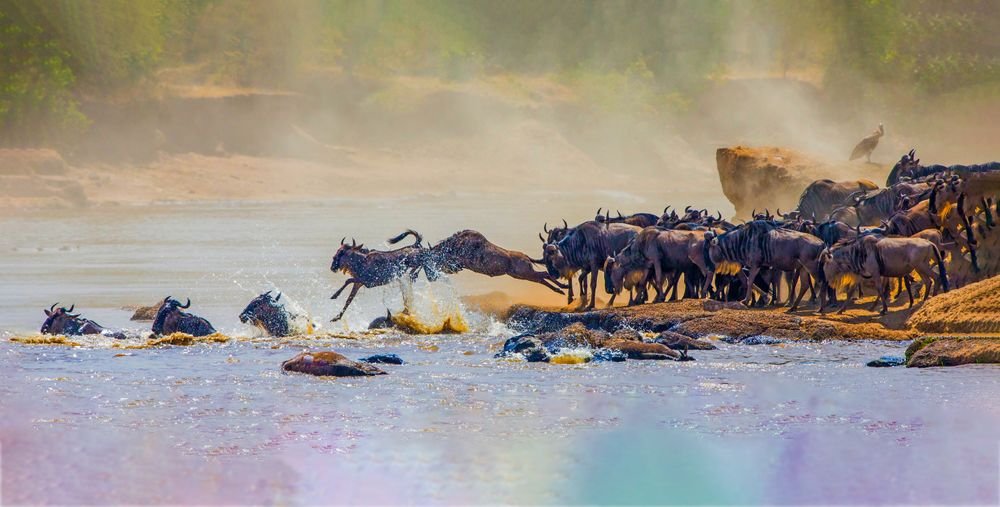
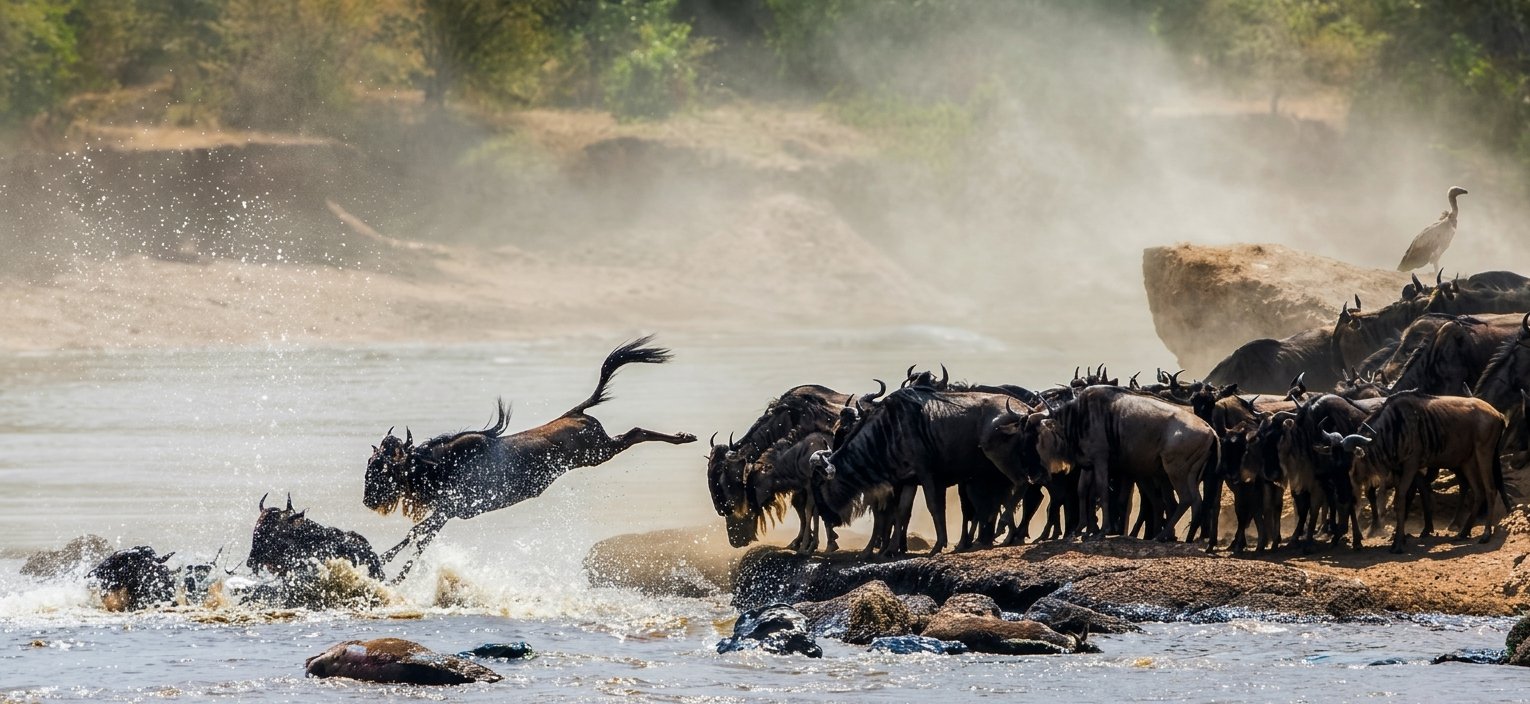
The Great Migration does not wait for your holiday. It follows the rain, fresh grass and an ancient instinct that has shaped the Serengeti for millennia. Get the timing right, and you could watch thousands of wildebeest gather at a riverbank, hesitate, then plunge into crocodile-filled water. Choose the wrong region for your dates, and the spectacle may be hundreds of kilometres away.
For discerning travellers, the question is not simply when is the Great Migration? It is where will the herds be, which camp puts you closest to the action, and how can you experience it without surrendering the privacy and comfort you expect?
The Serengeti Migration Calendar: Where to Be, Month by Month
The Great Wildebeest Migration is a continuous circuit through Tanzania’s Serengeti ecosystem and Kenya’s Maasai Mara. Its movements are broadly seasonal, but rainfall determines the pace. No calendar can guarantee a river crossing on a particular day.
January March: Ndutu and the Southern Plains
The southern plains become the stage for calving season, particularly in January and February. Newborn wildebeest arrive in remarkable numbers, drawing lions, cheetahs and hyenas into a landscape where life and danger unfold in full view. For photographers and serious wildlife enthusiasts, this can be every bit as compelling as the famous river crossings.
April–May: The Northward Movement
As the rains reshape the grasslands, herds begin moving north and west. The scenery turns intensely green, the atmosphere changes, and the migration becomes a story of movement rather than concentration. Travellers willing to look beyond peak-season dates may discover a quieter side of the Serengeti.
June: The Western Corridor and Grumeti River
The western Serengeti becomes increasingly important as herds move through the corridor. River crossings at the Grumeti may occur, offering a different chapter of the migration before the northern season attracts its greatest attention.
July–August: Northern Serengeti and the Mara River
This is the period many travellers have in mind when they imagine the Great Migration. Herds gather around the Mara River near the northern Serengeti and Kenya’s Maasai Mara. Some crossings are swift; others involve long periods of uncertainty. The tension is part of the experience.
September–October: The Northern Migration Continues
Crossings may continue as herds move between Tanzania and Kenya. The exact location and frequency vary, making the choice of camp particularly important. A well-positioned base allows more time to respond to changing wildlife movements instead of spending precious hours driving between distant areas.
November–December: The Return South
The short rains encourage the herds to move south again. By December, concentrations begin building towards the southern plains and the next calving season. The migration’s cycle prepares to begin again.
Coordinates Matter More Than the Month
A migration calendar is only the starting point. The more useful question is which geographical area offers the strongest prospects for your travel dates.
For calving season, focus on the Ndutu and southern Serengeti plains. For the Mara River, focus on Kogatende and the northern Serengeti, with the wider Maasai Mara ecosystem across the Kenyan border forming part of the same wildlife story.
These are planning areas, not fixed wildlife coordinates. Herds move, crossing points change, and rainfall can shift the usual timetable. Exact latitude and longitude should be confirmed for the particular camp or access point being considered, rather than treated as a guarantee of where animals will be.
The Luxury Advantage: Let the Camp Follow the Migration
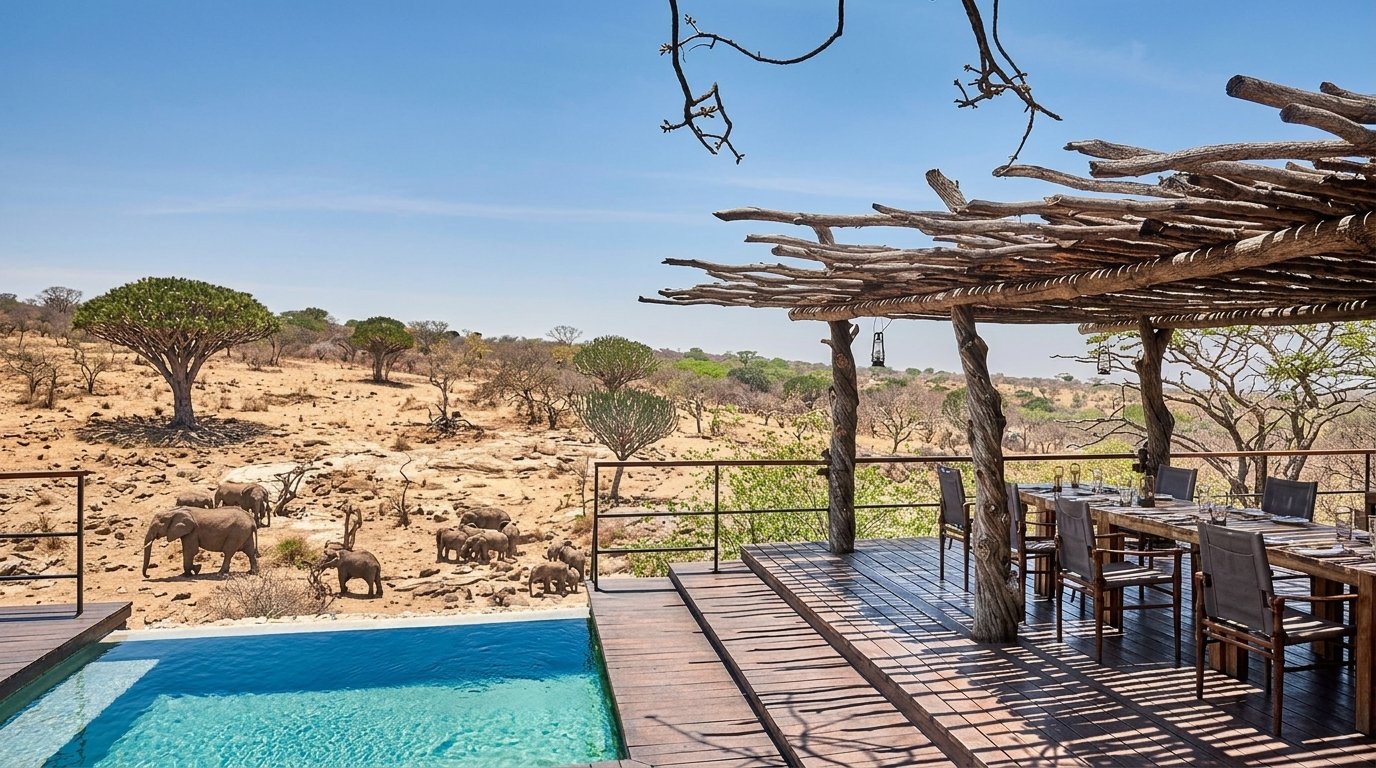
A beautiful lodge is not necessarily the right lodge for every season. During the migration, location can matter as much as the quality of the suite.
Seasonal mobile camps reposition between regions to remain close to likely herd movements. Depending on the operator and season, that may mean a camp in the south for calving or a northern base for the Mara River period. The advantage is straightforward: less unnecessary travel and more time devoted to wildlife.
For guests who value privacy, camp selection deserves equal attention. Some itineraries can incorporate private conservancies, exclusive-use arrangements or carefully chosen access options where these are available and permitted. However, not every riverfront camp sits on private land, and no camp can guarantee an uncrowded crossing or exclusive access to the river.
At Wildlife Tanganyika Expedition, the objective is to match the journey to the traveller—not simply sell a date on a calendar. That means considering seasonal positioning, accommodation style, transfers, guiding and the number of nights available in the right region.
Plan for the Experience You Actually Want
The Great Migration offers several distinct experiences: the urgency of calving season, the scale of moving herds, the drama of the Grumeti and the uncertainty of the Mara River. Each calls for a different itinerary.
If a Mara River crossing is your priority, consider travelling between July and October and allowing several nights in the northern Serengeti. More time in the region gives your guide greater flexibility to respond to reports of herd activity, although a crossing can never be promised.
If your dates are flexible, choose the wildlife experience first and build the journey around it. If your dates are fixed, select the region and camp that best fit the seasonal pattern.
The difference between an ordinary safari and an exceptional one often begins before departure—with the right decisions about timing, location and access.
Begin Planning Your Private Great Migration Safari
The most sought-after seasonal camps have limited capacity, and the strongest locations can book well ahead. Waiting until the migration appears in the headlines may leave fewer options for the dates and accommodation you want.
Speak to Wildlife Tanganyika Expedition about a private, tailor-made Serengeti safari. We can help you align your travel dates with the migration’s seasonal pattern, compare northern river-crossing itineraries with southern calving-season journeys, and consider accommodation and logistics suited to your priorities.
Your journey should be built around the wilderness you want to experience—not a promise that nature cannot make.
Plan your Great Migration safari with Wildlife Tanganyika Expedition.